If you are looking at Sausalito mixed-use or live/work property, the story is rarely just about square footage. In a compact, visitor-heavy waterfront city, value can rise or fall based on the block, the frontage, the parking setup, and how your intended use fits local rules. This guide will help you think through what tends to work in Sausalito, where the main opportunities are, and which due diligence issues deserve extra attention before you move forward. Let’s dive in.
Why Sausalito draws investors
Sausalito is small, with about 7,100 residents spread across roughly 2.257 square miles, yet it attracts a visitor population that can be several times larger than its year-round population, according to the City of Sausalito. For investors, that creates a very specific operating environment.
Demand is concentrated rather than evenly distributed. That means underwriting often comes down to micro-location, visibility, parking, and whether the building layout matches the most practical use for that corridor.
The public realm also matters here. The city recently completed a Bridgeway tree and streetscape project and has a downtown property and business improvement district in place for 2025 through 2029, which supports the long-term appeal of the core commercial area.
Key Sausalito mixed-use corridors
Bridgeway and downtown core
Bridgeway is Sausalito’s central downtown corridor. The city’s historic design guidelines describe the Downtown Historic Overlay District as centered around Princess Street and Bridgeway, with an emphasis on storefront rhythm, sidewalk-edge alignment, and strong street-level transparency.
If you are evaluating a repositioning play on Bridgeway, those details are not cosmetic extras. They can directly shape façade work, storefront improvements, and the overall feasibility of your business plan, especially if exterior changes trigger Historic Design Review.
Caledonia Street corridor
Caledonia has a different feel and a different use pattern. In the city’s housing materials, this area is described as Commercial-Residential, with support for local and resident-serving retail and service uses at street level, while downtown materials also describe residential units above ground-floor commercial businesses.
The city has also referred to Caledonia as a restaurant row area and authorized outdoor dining there. It now offers dedicated employee parking for the Caledonia District, which is a useful operational signal for food, beverage, and service-oriented uses.
What tenant mixes tend to work
Sausalito’s commercial zoning tables allow or conditionally allow a range of uses, including retail, restaurants, service uses, offices, office conversions, art galleries, banks and financial services, visitor-serving retail, and marine-related uses in certain districts, based on the city’s zoning regulations.
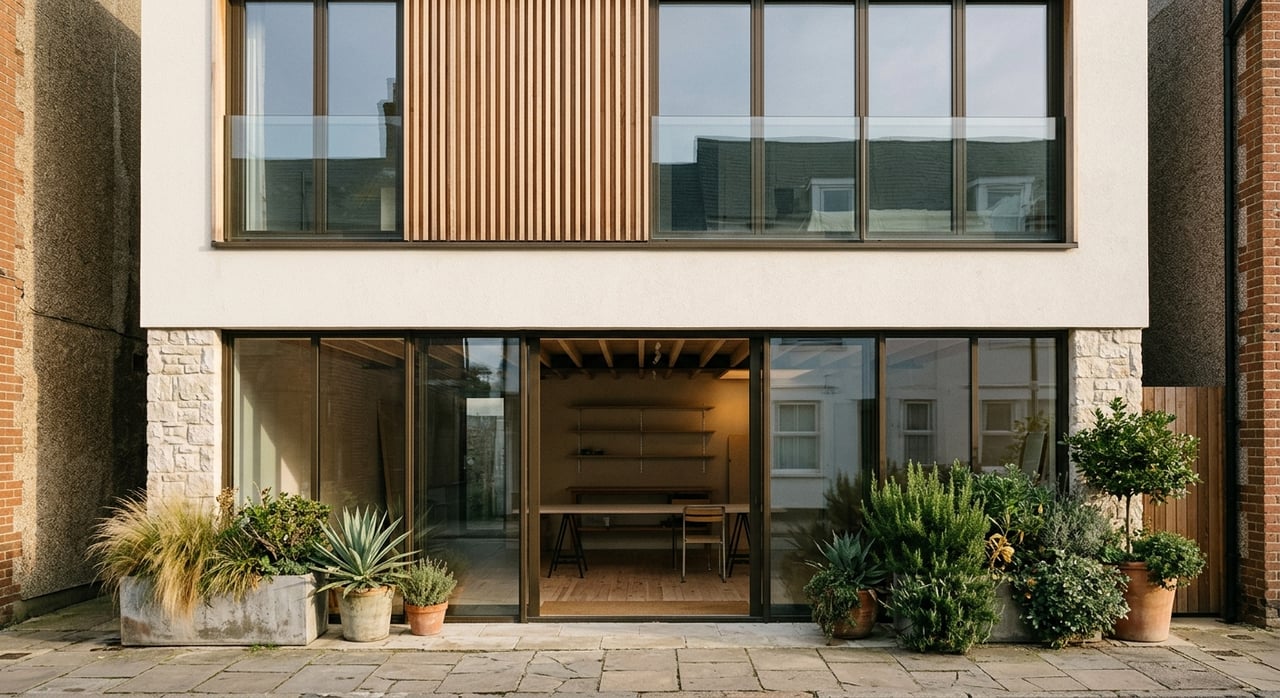
Recent city project examples offer a practical look at what mixed-use can mean on the ground. The city highlights projects such as 676-686 Bridgeway with first-floor storefronts and second-level residential, 101 Caledonia Street as a theater, restaurant, and office mixed-use conversion, and 715 Bridgeway as a historic bank conversion to a restaurant and three-room boutique hotel in its building projects archive.
Taken together, that points to a realistic tenant mix that often includes:
- Neighborhood-serving retail
- Food and beverage uses
- Personal services
- Professional services and small offices
- Upper-floor residential units
- Select arts or boutique hospitality uses in the right setting
That said, office is not always the simplest path. In several commercial districts, the zoning table shows that office conversions from existing retail, commercial-service, drinking and eating, or residential space require a Conditional Use Permit.
How live/work fits into the market
Live/work is not just a conceptual fit in Sausalito. The city’s more recent housing-overlay language states that residential uses may include live-work units, while some mixed-use overlays are designed to allow either 100 percent residential use or mixed-use projects that remain at least 85 percent residential.
That matters if you are looking for flexibility. A well-located property may support a hybrid use strategy, but the exact district, overlay, and existing configuration still need close review before you assume a live/work plan will pencil the way you expect.
Zoning and entitlement issues to watch
Sausalito updated its 2023-2031 housing-element zoning changes in May 2025 and received HCD substantial compliance on May 22, 2025. The city has said these changes were intended to help meet housing needs while also prioritizing preservation of the downtown historic district and sustainable waterfront development.
That balance is important for investors. Sausalito is open to evolution, but it is not a market where you should assume a straightforward suburban approval process.
Planning permits are broad
The city states that a planning permit is required for almost all changes to a residential, commercial, or industrial building. Businesses must also obtain an Occupational Use Permit and Business License, including home-based businesses, and an Occupational Use Permit is needed whenever a business use is established in a new location or tenant space.
In practical terms, this means even modest repositioning plans can involve more review than buyers first expect. It is wise to confirm permitting pathways early, before you underwrite timelines too aggressively.
Historic review can shape the business plan
If the property sits in the Downtown Historic Overlay District, exterior modifications, additions, and demolitions require Historic Design Review. The historic guidelines place emphasis on preserving the area’s traditional storefront pattern, pedestrian-scale frontage, and street-wall alignment.
For an investor, that can affect costs, design flexibility, signage assumptions, and construction timing. If your return depends on a visible exterior transformation, historic review should be part of your front-end feasibility work, not an afterthought.
Restaurant uses may need extra approvals
Food and beverage tenants can be attractive in Sausalito, but they often come with additional process. The city’s business startup guide notes that some restaurant uses need a Conditional Use Permit, outdoor dining on the sidewalk or in the public right-of-way needs a Minor Use Permit plus an encroachment permit, and alcohol-service approvals vary by district.
If you are buying with a restaurant lease-up strategy in mind, those details should be reflected in both your lease-up timeline and your capital plan.
Due diligence that matters most
Parking is not a side issue
Parking can materially affect operations in Sausalito. The city notes that some residential areas have limited parking and two-hour limits, while Caledonia now has 22 dedicated employee parking spaces and permit options for monthly, quarterly, and annual use.
For mixed-use and live/work properties, parking should be treated as a core underwriting variable. It can affect tenant demand, staffing, customer convenience, and the viability of certain uses more than many buyers expect.
Flood exposure deserves real analysis
Sausalito’s shoreline is in a FEMA Special Flood Hazard Area, and the city states that low-lying areas east of Bridgeway face higher risk. It also notes that sections of the Bridgeway corridor are vulnerable to flooding and sea-level-rise impacts.
If you are evaluating waterfront or near-water assets, review flood zone status, elevation, insurance implications, and access and egress scenarios. These are not secondary concerns in this market.
Utility and right-of-way issues can slow a project
Sausalito’s local ordinances require encroachment permits for work in the public right-of-way. The city also notes Sanitary District compliance-certificate requirements for private laterals when title transfers, use changes, or larger remodels occur, as outlined in its local ordinances guidance.
That is why permit history, sewer status, and right-of-way constraints should all be reviewed before you commit to a repositioning budget. Small-city logistics can have an outsized effect on timing and cost.
A practical underwriting lens
In Sausalito, a strong mixed-use or live/work investment usually starts with a few grounded questions:
- Is the property in the right corridor for the intended use?
- Does the frontage support visibility and pedestrian appeal?
- How constrained is parking for customers, staff, or residents?
- Will office, restaurant, or other planned uses require conditional approvals?
- Is the asset in a flood-sensitive area?
- Will historic design review affect exterior improvements?
- Are permit history, sewer compliance, and right-of-way issues fully understood?
Because Sausalito is small, visitor-heavy, parking-constrained, flood-exposed, and subject to historic and mixed-use review, many investors benefit from underwriting longer entitlement and lease-up timelines than they would in a more conventional suburban market. In this setting, patience and precision are often part of the value-creation strategy.
Why local strategy matters
Sausalito can be an appealing place to invest, but it rewards careful, block-by-block analysis more than broad assumptions. The best opportunities are often the ones where location, permitted use, design constraints, and operating realities are aligned from the start.
If you are considering an acquisition, disposition, or repositioning strategy for a Sausalito mixed-use or live/work property, working with an advisor who understands both commercial underwriting and Marin’s local review environment can save time and reduce avoidable friction. If you want a discreet, data-driven conversation about your options, connect with Drew Thomas.
FAQs
What makes Sausalito mixed-use property different from other Marin investments?
- Sausalito is a small, visitor-heavy waterfront market where value often depends on micro-location, visibility, parking, flood exposure, and local permitting rather than broad countywide trends.
Are live/work properties allowed in Sausalito?
- Yes, the city’s housing-overlay language states that residential uses may include live-work units, but the exact property district, overlay, and configuration still need to be verified.
What areas matter most for Sausalito mixed-use investing?
- Bridgeway and the downtown core are central commercial areas, while Caledonia Street is another important corridor with a Commercial-Residential context and active restaurant and service use patterns.
Do Sausalito mixed-use buildings often require historic review?
- If a property is in the Downtown Historic Overlay District, exterior modifications, additions, and demolitions require Historic Design Review.
What approval issues should investors check before buying a Sausalito live/work property?
- Investors should review zoning, overlays, planning permit requirements, Occupational Use Permit rules, possible Conditional Use Permit needs, and any historic-review triggers before closing.
Why is parking so important for Sausalito mixed-use assets?
- Parking can directly affect tenant operations, staffing, customer access, and residential convenience, and in some parts of Sausalito it is limited enough to change the practical value of a property.