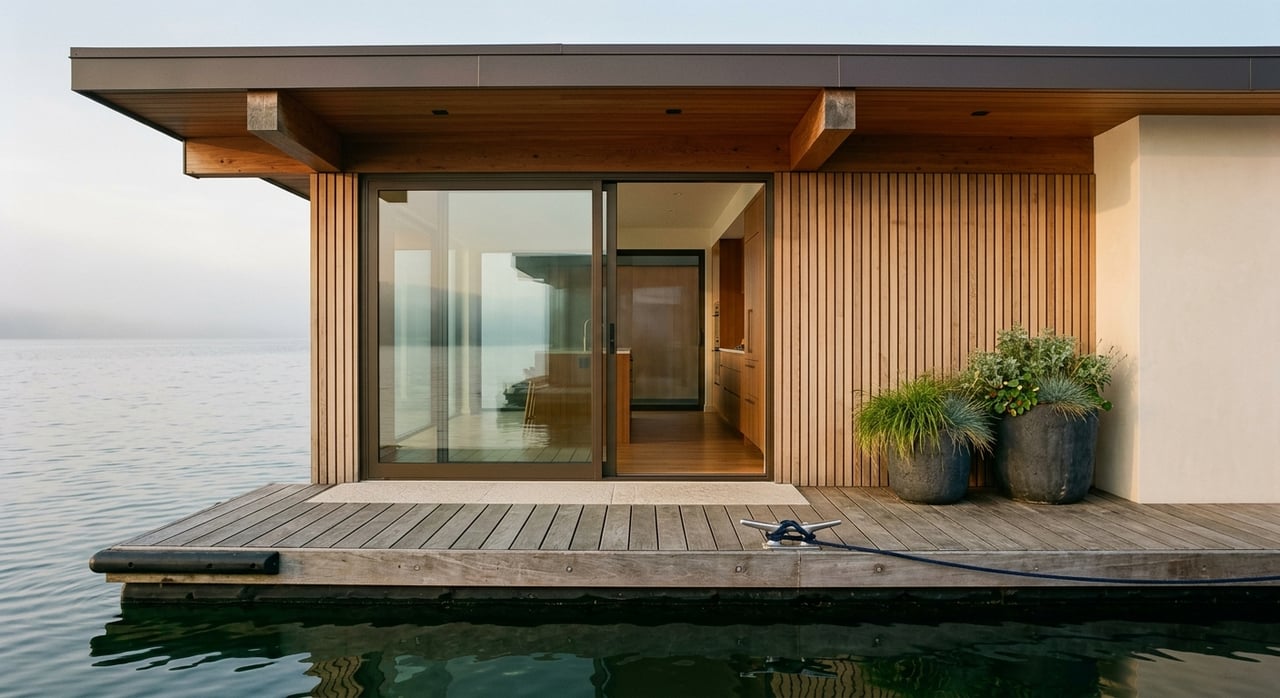
If you are drawn to Sausalito, you are probably not looking for a one-size-fits-all home. This small waterfront city offers two very different living experiences: life on the water in a floating home, or life above it in a hillside, Old Town, or New Town residence. Understanding how Sausalito’s geography shapes each option can help you choose a home that truly fits your day-to-day priorities. Let’s dive in.
Why Sausalito homes feel so different
Sausalito sits between Richardson Bay and the coastal mountains, and that setting drives the city’s housing character. According to the City of Sausalito’s shoreline adaptation information, water rise along the city’s 2.5 miles of shoreline affects housing, transportation, utilities, shoreline recreation, and economic growth.
At the same time, the city notes that more than 30 stairs and paths climb its steep hillsides, and some neighborhoods have narrow streets without sidewalks. In real life, that means your housing choice is not just about style. It is also about access, movement, and how you want to live within Sausalito’s terrain.
Floating homes in Sausalito
What floating-home living looks like
Sausalito’s floating-home community is a recognized residential environment, not just a niche curiosity. The Floating Homes Association says it represents residents of more than 400 homes across five floating-home marinas, while city housing materials note eight marinas with over 1,500 vessels and several hundred permanent liveaboard residents.
The city describes the floating-home area as eclectic, colorful, communal, and deeply connected to Bay Area maritime culture. You will find container gardens, shared gathering spaces, and a setup where co-ops or harbor operators often handle utilities, access, and shoreline improvements, based on the city’s housing and planning materials.
What daily life depends on
Floating-home living tends to be highly water-oriented. Private access is primarily by fixed piers, and while the homes themselves float and respond to changing tides, the supporting systems such as docks, access paths, parking, and utilities stay tied to fixed land elevations.
That distinction matters. The city notes that these supporting systems are more exposed to sea-level-rise risk, so buyers should think not only about the home itself, but also about the marina infrastructure that supports everyday living.
Who may prefer this lifestyle
If you value a close connection to the water, a distinctive residential setting, and a communal atmosphere, floating-home living may feel especially appealing. The city also ties this area to a long-standing culture that has attracted artists, musicians, boat builders, and other creative residents over time.
For many buyers, the biggest draw is not square footage alone. It is the experience of dock life, waterfront perspective, and a home environment shaped by shared systems and a unique shoreline setting.
Hillside, Old Town, and New Town homes
What land-based housing offers
On land, Sausalito’s housing is still varied, but the form is more conventional. The city’s general plan describes Old Town and Hurricane Gulch as the oldest part of Sausalito, with a mix of single-family, duplex, and multi-family homes, including many smaller dwellings and rentals, plus newer and larger units on steeper slopes.
The Hill presents another layer of contrast. The city says this area retains much of its early 20th-century character, with larger older homes mixed with condominiums and apartments near downtown.
How New Town differs
New Town has its own identity. According to the same general plan, it includes smaller bungalows, mixed-age apartments, condominiums, and older small homes, along with resident-serving commercial uses on Caledonia Street and the central waterfront.
The city’s shoreline materials also note that New Town was developed later on filled tidelands and now functions as a layered mix of civic, recreational, and residential uses. That gives New Town a different physical and planning context from homes higher on the hillside.
What daily life feels like uphill
If floating homes are defined by docks, hillside and town neighborhoods are often defined by slopes, stairs, and views. The city notes that Sausalito’s steep hillsides are threaded by many stairways and paths, and it advises caution in areas with narrow streets and crossing patterns in its pedestrian and traffic safety information.
For buyers, this means daily routines matter. You may love elevated views and architectural variety, but you also want to think through how often you will navigate stairs, hillside streets, and parking constraints.
Floating home vs. hillside home
Key lifestyle differences
The strongest contrast between these housing styles is lifestyle. Floating homes emphasize waterfront culture, communal dockside living, and dependence on marina infrastructure.
Hillside, Old Town, and New Town homes tend to emphasize land-based architecture, vertical circulation, neighborhood streets, and the practical rhythm of living in a steep, built-out city. Neither choice is inherently better. The right fit depends on how you want your home to support your everyday life.
| Housing Style | Often Feels Like | Key Practical Focus |
|---|---|---|
| Floating home | Waterfront, communal, marina-centered | Dock access, shared infrastructure, parking, shoreline conditions |
| Hillside home | Elevated, view-oriented, stair-connected | Slopes, street access, parking, site-specific upkeep |
| Old Town/New Town home | More conventional urban-coastal living | Walk patterns, traffic flow, parking, lot and building constraints |
Practical issues buyers should weigh
Access and parking
In Sausalito, access can be just as important as the home itself. The city says parking can be difficult in many residential areas, and resident parking benefits vary by location and eligibility.
That means your daily experience may hinge on whether your home is reached by dock, hillside stairs, or a street segment with parking rules. Before you fall in love with a property, it helps to picture ordinary moments like unloading groceries, hosting guests, or getting out quickly for a commute.
Renovation and expansion
If you are considering a land-based property with long-term improvement potential, site conditions matter. The city’s ADU program guidance notes that hillside projects may involve added costs for grading and staging construction equipment such as cranes, along with considerations like setbacks, foundation work, fire safety, and utility connections.
In short, expanding a hillside home is often possible, but it is usually site-specific rather than simple. Buyers who want flexibility should evaluate the lot, slope, and access conditions early.
Rental rules
Some buyers also ask whether a home can be used as a short-term rental. The city states that short-term rentals under 30 days are not allowed.
That rule is important whether you are looking at a floating home or a hillside property. If rental use is part of your decision-making, you will want to confirm how local rules align with your plans.
One shared factor: shoreline risk
Even though floating homes and hillside homes feel very different, they share a broader planning backdrop. The city’s sea-level-rise FAQ says Bridgeway in Old Town, Downtown, and New Town is vulnerable to flooding, along with the ferry landing and parking lot.
That is a useful reminder for any buyer. Even if your home sits higher up, your routines may still depend on lower-lying corridors for errands, commuting, and visitor access. In Sausalito, housing decisions are closely linked to how the larger landscape functions.
How to decide what fits you best
If you are choosing between a floating home and a hillside or town property, start with your routine before you focus on aesthetics. Ask yourself where you want your transitions to happen: on a pier above the bay, on hillside stairs, or along a more traditional residential street.
Then think about the practical side. Consider access, parking, maintenance, renovation potential, and how comfortable you are with the infrastructure and topography that come with each housing type.
In a market as nuanced as Sausalito, the right choice often comes from matching the property to your lifestyle, not just your wish list. If you want clear, strategic guidance on Sausalito and the broader Marin market, Drew Thomas can help you evaluate the details that matter most and move forward with confidence.
FAQs
What makes floating homes in Sausalito different from hillside homes?
- Floating homes are tied to dock access, shared marina infrastructure, and waterfront living, while hillside homes are shaped more by slopes, stairs, streets, and elevated land-based settings.
Are floating homes in Sausalito considered a real residential community?
- Yes. City planning materials and the Floating Homes Association describe Sausalito’s floating-home area as a recognized, regulated residential community on the water.
What should buyers know about parking in Sausalito neighborhoods?
- The city says parking can be difficult in many residential areas, so your daily routine may depend heavily on whether a home is near a dock, stairway, or street with parking restrictions.
Can you easily expand a hillside home in Sausalito?
- Not always. The city notes that hillside projects can involve site-specific issues such as grading, staging equipment, setbacks, foundation work, fire safety, and utility connections.
Are short-term rentals allowed for Sausalito homes?
- No. The city states that short-term rentals of fewer than 30 days are not allowed.
Does sea-level rise affect only waterfront homes in Sausalito?
- No. The city says important low-lying routes and facilities, including parts of Bridgeway, the ferry landing, and parking areas, are vulnerable to flooding, which can affect access for many residents.