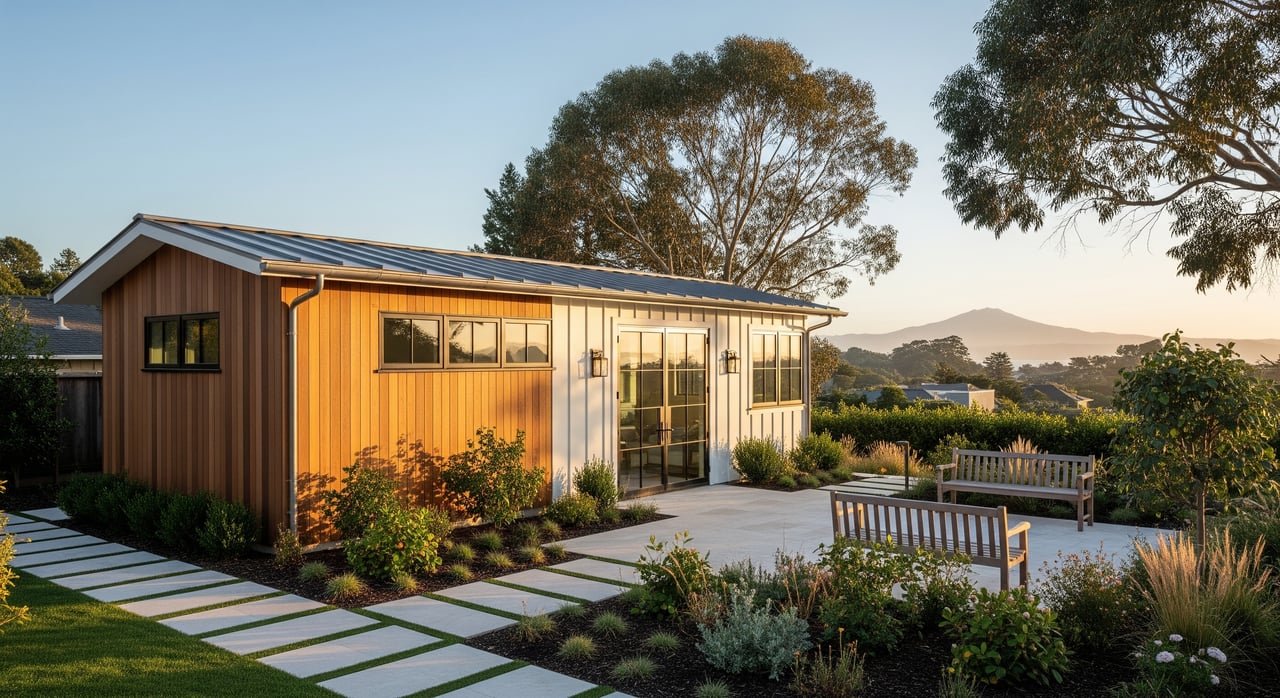
Thinking about adding a backyard cottage or converting space at your Corte Madera home? An accessory dwelling unit can boost flexibility, support multigenerational living, and create rental income in a market where housing is tight. The key is understanding how California rules intersect with local conditions that affect cost, timing, and value. This guide walks you through ADU basics for Corte Madera and nearby Marin communities so you can plan with confidence. Let’s dive in.
What counts as an ADU
An accessory dwelling unit is a smaller, self-contained home on the same parcel as a primary residence. You’ll typically see three types:
- Detached ADU: A separate structure, often in the backyard.
- Attached ADU: Connected to the main house or within an addition.
- Junior ADU (JADU): Up to 500 square feet carved out of existing space in the primary residence, often with a small kitchenette.
You can use an ADU for long-term rental, a guest suite, or household needs. Short-term rental use is regulated separately by local rules, so verify what is allowed before planning around that strategy.
Why ADUs make sense in Corte Madera
Marin County’s high housing costs and limited new development make ADUs a practical way to add housing and income on existing lots. In Corte Madera, geography matters. Proximity to creeks, marshes, and shoreline areas can introduce floodplain and engineering requirements that shape design and cost.
If you are buying or selling, a permitted ADU often increases buyer interest and appraised value because it adds rentable square footage and flexibility. Unpermitted conversions can be a liability that complicates financing and transfer.
Permits and rules: State and local
California law broadly requires cities and counties to allow ADUs that meet objective standards and to process them ministerially once an application is complete. That means no discretionary public hearing is required for qualifying projects, and state timelines apply.
Key state-level points that affect Corte Madera:
- JADUs up to 500 square feet are allowed in single-family zones.
- ADU size and height caps are set by state law and local ordinance. Confirm the limits for your zoning district.
- Parking requirements are limited in many scenarios, including near transit. Rules are site specific.
- Some fees are reduced or constrained by state law, often for smaller ADUs under defined size thresholds.
Local permitting is handled by the Town of Corte Madera’s Planning and Building Divisions. The town follows state law and applies local objective standards such as setbacks, height, lot coverage, and design details. Under state provisions, minimum side and rear setbacks of 4 feet often apply to certain ADUs, but you should confirm the exact standard for your lot. Owner-occupancy and short-term rental rules have evolved in recent years, so always check current code language before finalizing plans.
Typical permitting steps and timelines
A straightforward process saves time and money. Here is the common path for Corte Madera projects:
- Pre-application conversation with the Planning Division to confirm zoning, allowed ADU type, setbacks, height, parking, and any site constraints.
- Prepare site and architectural plans. Include structural calculations, energy compliance, and any required civil or geotechnical reports.
- Submit your application for planning intake and a building permit.
- Plan check and corrections. Reviews may include structural, energy, fire, and utilities.
- Permit issuance and inspections during construction.
State law generally requires a ministerial decision within a set period after a complete application, commonly 60 days. Actual timing depends on plan completeness and site complexity.
- Simple attached ADU or JADU: about 2 to 4 months from complete application to permit issuance.
- Detached ADU with site work or flood mitigation: about 4 to 9 months or more, depending on engineering and reviews.
Costs in Marin: What to budget
Construction costs vary with size, finish level, access, and site conditions. In Marin and the broader Bay Area, total project budgets that include hard and soft costs commonly fall into these ranges:
- JADU in existing space, up to ~500 sq ft: tens of thousands to low six figures.
- Attached ADU conversion or addition, ~300–800 sq ft: generally $100,000 to $350,000 or more.
- Detached ADU, 500–1,200 sq ft: commonly $200,000 to $600,000 or more, with high-end or complex sites reaching $600,000 to $900,000.
Drivers of higher cost in Corte Madera include flood-proofing and elevated foundations, engineered foundations for soft soils, retaining walls or grading, utility extension and sewer upgrades, and extended timelines.
Soft costs, fees, and connections
Soft costs typically include architecture, structural engineering, civil design, geotechnical studies if needed, permits, plan check, and utility connection fees. Design teams often run 8 to 15 percent or more of construction cost, and permit-related fees can range from several thousand to tens of thousands depending on size and valuation.
State law constrains some impact and connection fees for ADUs, especially under certain size thresholds, often below 750 square feet. Local practice varies, so confirm the current fee schedule with the town and your utilities. Sewer, water, school, and utility meter fees may apply depending on unit size and configuration.
Corte Madera site constraints to watch
Local geography can shape your plan and budget. Common site factors include:
- Floodplain and shoreline: Some neighborhoods lie within FEMA flood hazard zones or near shoreline areas that can trigger elevation requirements or additional reviews. This affects foundation design and cost.
- Soils and slopes: Marshy or unstable soils may require engineered foundations. Retaining walls and access logistics also add cost.
- Trees and landscaping: Tree protection rules can limit placement and require mitigation if removal is necessary.
- Utilities: Older laterals and panels sometimes need upgrades. Plan for sewer, water, and electrical capacity early.
A brief site due diligence phase can prevent surprises and help you choose the right ADU type and location.
Value, rent, and appraisals
A permitted ADU generally enhances property value because it adds legal, rentable space and flexibility. Appraisers look at permitted status, independent access, construction quality, and comparable sales with ADUs. If your ADU can generate positive net income, appraisers often consider that in valuation.
Marin’s limited housing supply and commuter access drive steady demand for quality rentals. Actual rents vary by size, finishes, and location. If you plan to rent, confirm whether long-term or short-term use is allowed for your property. Unpermitted ADUs can reduce marketability and create risk, so prioritize permitted pathways.
Taxes and insurance
Property taxes typically increase based on added improvements, with assessment handled under standard local practices. If you refinance to fund construction, assessment usually follows normal triggers such as sale or change of ownership. For precise guidance, consult the local assessor.
Update your homeowners insurance to reflect the added structure and any rental exposure. Separate landlord or short-term rental coverage may be needed depending on use. If your site is in a flood zone, flood insurance may be required or advisable and can be a meaningful line item in your budget.
Step-by-step plan for success
Use this simple roadmap to keep your ADU on track:
- Confirm zoning, allowed ADU type, and objective standards with the Town of Corte Madera.
- Check FEMA flood maps and any shoreline jurisdiction to understand elevation or permit needs.
- Verify sewer and water capacity and potential connection or capacity fees.
- Develop a site plan showing structures, setbacks, trees, driveways, and any flood elevation lines.
- Create floor plans and elevations for the ADU, plus structural, energy, and other code documents.
- Assemble a team with Marin ADU experience, especially for flood or soils engineering.
- Obtain multiple bids and add a contingency, often 20 percent for complex sites.
- Submit a complete application to streamline ministerial review.
- Plan for inspections and keep your team aligned on schedule and budget.
Financing options
Homeowners commonly fund ADUs with:
- Cash.
- Home equity line of credit or home equity loan.
- Cash-out refinance.
- Renovation loans, including programs that support conversions.
- Private construction financing.
Lender criteria differ, and permitted ADUs are typically easier to finance. If you are buying a property with an existing ADU, confirm permit status and rental history during due diligence.
Build new or buy with an ADU
If you need flexibility sooner, consider purchasing a property that already has a permitted ADU. You can start benefiting from additional space or rental income faster, and you avoid construction risk. If you prefer tailoring the space to your needs, building can be the better long-term play, especially if you are optimizing for multi-generational living or a specific layout.
Either path benefits from a realistic budget, a clear timeline, and early validation of rules and fees.
Quick pre-project checklist
- Verify zoning, setbacks, height, and lot coverage with the town.
- Confirm parking requirements and whether state exemptions apply at your address.
- Check flood zones, shoreline jurisdiction, and any elevation requirements.
- Review sewer, water, and electrical capacity and fees.
- Plan for tree protection and landscaping requirements.
- Line up Title 24 energy compliance and any required geotechnical studies.
- Gather multiple contractor bids and references from local ADU projects.
The bottom line for Corte Madera
An ADU can be a smart way to add value, flexibility, and potential income in Corte Madera, but local site conditions and objective standards will drive feasibility and cost. When you align your design with state rules, confirm town requirements early, and budget for site realities, the process becomes far more predictable. If you are weighing build versus buy, or you want a second set of eyes on value and design, expert guidance can save time and money.
Ready to map out your best path? Connect with Drew Thomas for data-driven advice, design and construction consultation, and a clear plan tailored to your property.
FAQs
What is the difference between an ADU and a JADU in Corte Madera?
- An ADU is a separate dwelling unit that can be detached or attached, while a JADU is up to 500 square feet within the existing primary residence; both are allowed under California law with local objective standards applied.
How long does it take to get an ADU permit in Corte Madera?
- Typical ministerial timelines run about 2 to 4 months for simple attached ADUs or JADUs and about 4 to 9 months or more for detached units with site work, assuming a complete and conforming application.
What are typical ADU construction costs in Marin?
- Budget ranges often fall around $100,000 to $350,000 or more for attached ADUs and $200,000 to $600,000 or more for detached units, with complex or high-end projects reaching $600,000 to $900,000.
Do I need to provide parking for an ADU in Corte Madera?
- State law limits when cities can require new parking, including in many transit-proximate cases; requirements are site specific, so confirm with the town for your address.
Can I use my Corte Madera ADU as a short-term rental?
- Short-term rental use is regulated separately and rules evolve; verify current local ordinances before assuming STR income.
How will an ADU affect my property value and appraisal in Marin?
- A permitted ADU usually increases value and marketability, and appraisers consider permitted status, comparable sales with ADUs, and potential net rental income.
What floodplain issues affect ADUs in Corte Madera?
- Properties in FEMA flood zones may need elevated finished floors, engineered foundations, and specific details like flood vents, which add cost and time but improve resilience.