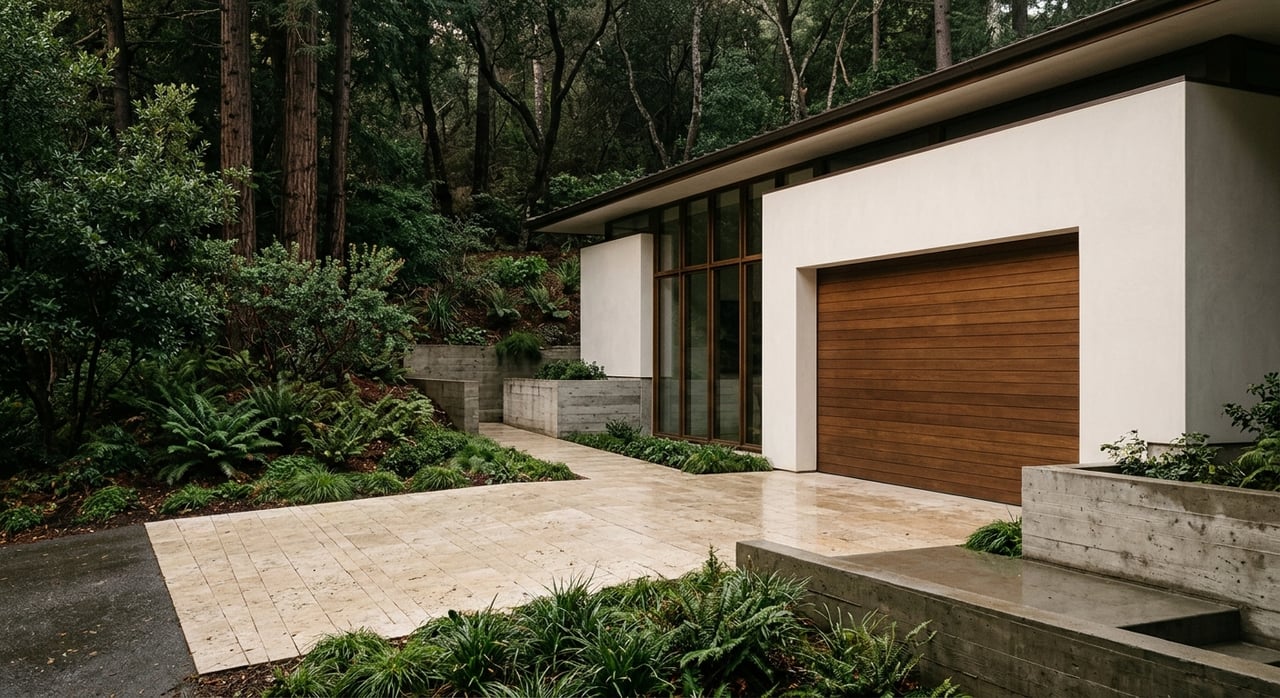
If you are thinking about trading San Francisco’s fast pace for more space, easier access to nature, and a quieter daily rhythm, Mill Valley is likely already on your radar. It offers a very different way of living without feeling far from the city, which is why so many Bay Area buyers make the move. When you know what changes to expect, you can plan with more confidence and choose the right fit for your lifestyle. Let’s dive in.
Mill Valley feels different from San Francisco
The biggest shift is simple: Mill Valley is not an extension of San Francisco’s urban grid. According to the city, it is a primarily suburban community shaped by valleys, hillsides, redwoods, Mount Tamalpais, Richardson Bay, and Highway 101. That natural setting gives the area its character, but it also changes how you move through your day.
Instead of long stretches of continuous storefronts and dense city blocks, Mill Valley tends to organize daily life around a few main commercial corridors. You will likely spend more time planning errands by area, route, and parking than you do in San Francisco. In return, many residents gain calmer streets, more privacy, and quick access to trails and open space.
The commute to San Francisco changes your routine
If you still work in San Francisco, your commute will likely center on southbound Highway 101 and the Golden Gate Bridge. Mill Valley is served by three freeway interchanges: Mill Valley/Stinson Beach, Redwood Highway Frontage Road/Seminary Drive, and East Blithedale/Tiburon Boulevard. That gives you multiple access points, but your actual travel experience will depend heavily on timing and congestion.
The Golden Gate Bridge carries about 112,000 vehicles per day, and tolling is electronic in the southbound direction into San Francisco. For many relocating households, the key lesson is that mileage does not tell the whole story. Schedule flexibility, route choice, and whether you drive or use transit will shape your week more than a map alone.
Bus and park-and-ride options matter
Transit is available, but it works differently than city transit. Golden Gate Transit lists a Mill Valley to San Francisco bus route, and the Seminary Drive at Highway 101 park-and-ride lot is served by routes 120 and 132. Marin Transit also operates Route 17 between Downtown San Rafael and Sausalito via Mill Valley.
That means you can build a commute around bus service, but it is more regional and schedule-based than San Francisco’s street-by-street transit pattern. If you are moving from a neighborhood where transit is part of every block, this will feel like a meaningful adjustment.
Ferry commuting usually requires a connection
Some buyers assume Mill Valley has direct ferry service, but official ferry service operates from Larkspur, Sausalito, Tiburon, and San Francisco. In practice, that means many Mill Valley residents who prefer the ferry use a short drive, rideshare, or bus connection to a nearby terminal. For the right household, that can still be a great routine, but it is not usually a walk-to-the-boat setup.
Neighborhoods vary more than many buyers expect
One of the most important things to understand is that Mill Valley is not one uniform experience. The city’s neighborhood map includes areas such as Tam Valley, Almonte, Homestead, Strawberry, Alto, Scott Valley, Sycamore/Tamalpais Park, Miller/Molino, Bayfront/Enchanted Knolls/Shelter Ridge, and the downtown core. Each area has a different feel based on topography, street pattern, and housing style.
If you are relocating from San Francisco, this matters because two homes with the same price point can deliver very different day-to-day living. One may feel tucked away among trees on narrow, winding roads, while another may offer flatter terrain and easier access to shopping and commuting routes.
Downtown offers the most walkable setting
Downtown Mill Valley is the city’s most walkable core. The city describes it as a compact residential and commercial area centered on Throckmorton, Lovell, and Blithedale Avenues, with Lytton Square and Depot Plaza at the center. Housing here includes apartments, condos, and some of the city’s oldest single-family homes.
If you want a softer landing from city life, downtown can feel familiar in the best way. You still get a pedestrian-oriented setting, nearby civic uses, and convenient access to shops and services, but in a much smaller and calmer format.
Miller and East Blithedale offer practical access
Miller Avenue and East Blithedale are important transitional corridors. Miller Avenue has a more main-street feel, with trees, narrow sidewalks, mixed-use buildings, retail, and smaller residential pockets tucked into the hillside. East Blithedale and Alto Center serve neighborhood shopping plus regional retail and office uses, with a more suburban character.
For many buyers, these areas offer a useful balance of convenience and neighborhood feel. If commute efficiency and easy errands are high on your list, these pockets deserve a close look.
Flatter east-side areas live differently
The city describes the east-side commercial and residential areas as flatter and more auto-oriented. Redwood Highway frontage includes freeway-oriented office and commercial uses, while Marsh/Bayfront, Scott Valley, Alto, Enchanted Knolls, and Shelter Ridge include contemporary subdivision patterns, larger condo and townhouse developments, and walking paths toward marsh and bay areas.
If you want easier navigation and a more conventional street layout, these areas may feel more intuitive than canyon or hillside locations. They can be especially appealing if you are trying to balance outdoor access with straightforward commuting.
Canyon and hillside areas feel more tucked away
Cascade and Blithedale Canyons and Miller/Molino are known for redwood canopy, narrow roads, and steeper lots. Sycamore/Tamalpais Park is relatively level and has a different street pattern with more conventional lotting. These details may sound minor on paper, but they shape daily life in real ways.
When you tour homes, pay attention to more than the house itself. Think about road width, parking, turning radius, sunlight, and how the setting feels at different times of day. In Mill Valley, micro-location matters.
Housing costs are high, and inventory types differ
Mill Valley is an expensive housing market by any standard. The 2024 ACS profile reports 6,418 housing units, a 66.1 percent owner-occupied rate, a median owner-occupied home value above $2 million, and a median gross rent of $3,278. For many San Francisco buyers, that means the move is not necessarily about spending less. It is often about getting a different lifestyle and housing experience for the money.
You may also notice a different housing mix than in many San Francisco neighborhoods. Depending on where you look, options can include condos, townhomes, older single-family homes near downtown, and more secluded hillside properties. The right choice depends on how you want to live, not just what looks best online.
Outdoor access becomes part of daily life
For many people, this is the reason Mill Valley wins. Mount Tamalpais State Park offers more than 60 miles of hiking trails connected to a 200-mile trail system on neighboring public lands, and the Dipsea Trail runs from Mill Valley toward Stinson Beach. Muir Woods National Monument is also in Mill Valley, about 11 miles north of the Golden Gate Bridge.
This is not just a weekend lifestyle perk. In Mill Valley, access to trails, redwoods, parks, and open space can become part of your regular weekday routine. A quick walk, run, or afternoon park stop can be built into the rhythm of normal life.
Everyday errands stay local
The city’s parks system includes parks, fields, and a nine-hole golf course, and civic amenities like the community center, public library, and city hall are located near the town core. Shopping and services are concentrated in four main commercial areas: Downtown, Lower Miller Avenue, East Blithedale/Alto Center, and Redwood Highway Frontage Road.
That layout creates a local-serving pattern rather than a large urban retail environment. For many households, that means fewer sprawling errands and a more contained, neighborhood-based routine.
San Rafael may stay part of your routine
Even if you move to Mill Valley, San Rafael may still play a supporting role in your day-to-day life. Marin Transit Route 17 connects Downtown San Rafael to Sausalito via Mill Valley, and San Rafael remains one of Marin’s key urban centers. Depending on where you work, shop, or spend time, you may find that Mill Valley and San Rafael function together as part of your weekly geography.
For buyers relocating from San Francisco, this is a helpful mindset shift. Rather than expecting one town to replicate everything you use in the city, think in terms of a Marin lifestyle where nearby communities often complement one another.
What the trade-off really looks like
At a high level, Mill Valley tends to work best for buyers who want more space, a more residential setting, and immediate access to nature. The trade-off is less urban spontaneity and a routine shaped more by driving routes, topography, and regional transit patterns. That does not make it better or worse than San Francisco. It simply makes it different.
For many professionals and families, that difference is exactly the point. If your priorities are shifting toward privacy, outdoor living, and a calmer pace while staying connected to the city, Mill Valley can be a smart long-term move.
A successful relocation comes down to matching your daily habits with the right micro-location, housing type, and commute plan. If you want a thoughtful, data-driven perspective on where to focus your search in Mill Valley and greater Marin, Drew Thomas can help you navigate the move with clarity and discretion.
FAQs
What is the biggest lifestyle change when moving from San Francisco to Mill Valley?
- The biggest change is moving from an urban grid to a more suburban, topography-driven town where daily life centers on a few main corridors, quieter neighborhoods, and easier access to nature.
What should San Francisco commuters expect from Mill Valley commuting?
- Most San Francisco commutes from Mill Valley rely on Highway 101 and the Golden Gate Bridge, with travel time shaped heavily by congestion, timing, and whether you drive, take a bus, or connect to a ferry terminal nearby.
What are the main neighborhood differences in Mill Valley for relocating buyers?
- Downtown is the most walkable area, east-side neighborhoods tend to be flatter and more auto-oriented, and canyon or hillside areas often have narrower roads, steeper lots, and a more secluded feel.
What does the Mill Valley housing market look like for buyers and renters?
- Census data shows a high-cost market with median owner-occupied home value above $2 million, median gross rent of $3,278, and a mix of condos, townhomes, apartments, and single-family homes depending on location.
What outdoor amenities make Mill Valley appealing to San Francisco relocators?
- Mill Valley offers direct access to Mount Tamalpais State Park, the Dipsea Trail, Muir Woods, city parks, fields, and other recreation spaces that can become part of your everyday routine.
How does San Rafael fit into daily life after moving to Mill Valley?
- San Rafael often remains part of the weekly routine for many residents because it is a nearby Marin hub and is connected to Mill Valley by local transit, including Marin Transit Route 17.