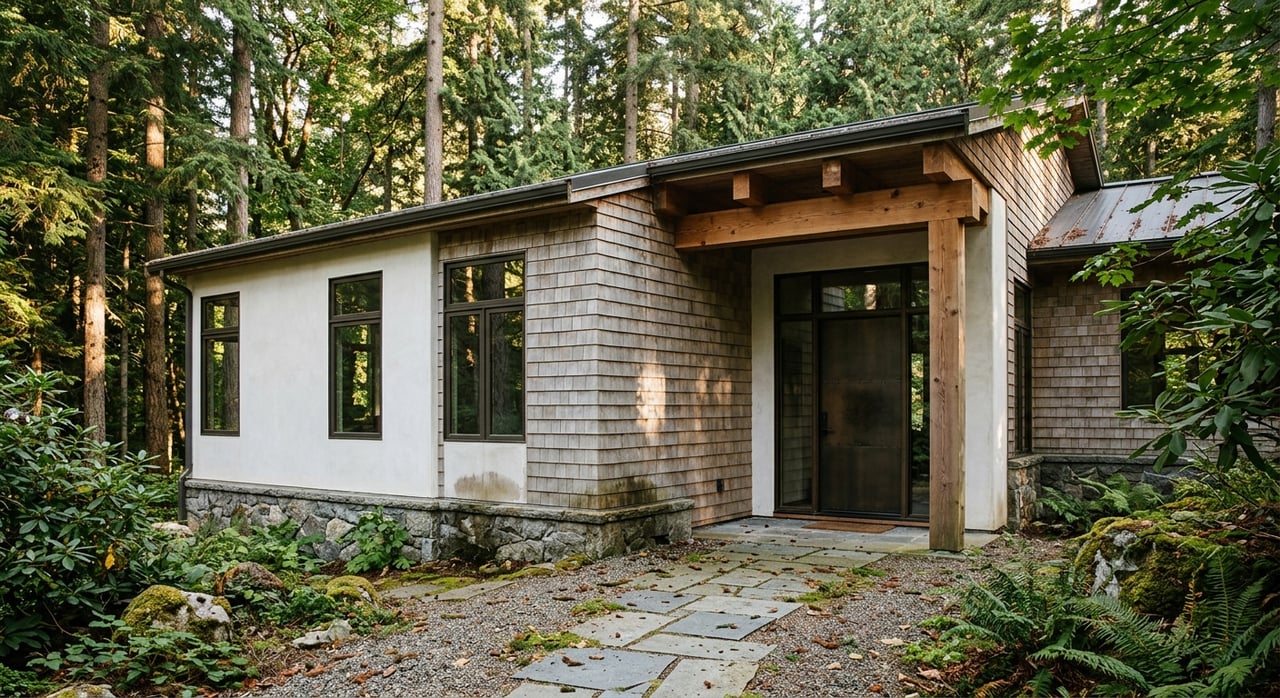
If you have been trying to pin Kentfield down to one “look,” you have probably noticed something important: it does not fit neatly into a single style box. In this small Marin County community, the bigger story is not one dominant architecture trend, but how homes respond to setting, lot size, privacy, and topography. If you are comparing parts of Kentfield or trying to decide what kind of property fits your lifestyle, this guide will help you understand the tradeoffs clearly. Let’s dive in.
Kentfield Is Defined by Setting
Kentfield is an unincorporated Marin County community, not an incorporated city, with 6,808 residents and 2,702 households according to the Census Bureau’s 2020 data set and 2020 to 2024 ACS figures. It spans about 3.03 square miles and has an owner-occupied housing rate of 80.9%, with median owner-occupied home values reported at $2,000,000 or more.
That data helps explain the overall tone of the market, but it does not tell you what Kentfield “looks like” on the ground. Marin County planning is a better guide here. County design standards for unincorporated single-family areas focus on site planning, preserving natural features, compatibility with nearby development, massing, and scale, rather than prescribing one architectural style.
In plain terms, Kentfield is best understood through its different residential settings. Some areas feel wooded and estate-like, while others feel more conventional and street-oriented. That distinction matters just as much as square footage or finishes when you are deciding where to buy.
Kent Woodlands Feels Private and Estate-Like
If you are drawn to seclusion, mature trees, and a stronger sense of retreat, Kent Woodlands is the clearest example of Kentfield’s privacy-first setting. Marin County describes much of Kent Woodlands as low-density residential, generally around one unit per 1 to 5 acres, in a steep and heavily wooded bowl-shaped canyon.
The official land-use report also notes mixed evergreen forest, ravines, and slopes ranging from about 40% to 67%, along with scenic views toward the lower Ross Valley and San Francisco Bay. That combination creates one of the most distinctive living environments in Kentfield.
This is where the idea of “home style” expands beyond architecture. In Kent Woodlands, the setting itself often defines the experience. Large lots, natural screening, long driveways, and hillside placement can all shape how a property lives day to day.
What large-lot living often means
Recent county project filings help illustrate the pattern. One approved project on Laurel Way included an 11,720-square-foot residence on a 45,349-square-foot lot, along with fencing, screening walls, an automatic gate, gardens, retaining walls, and significant tree-related site work.
Another Kentfield-Kent Woodlands filing involved 5,675 square feet of proposed development on a 23,404-square-foot lot, with setbacks stretching more than 100 feet from the rear property line. Those examples show how privacy, landscape design, and site planning can be central features of the property, not just background details.
Why buyers choose this setting
For many buyers, the appeal is clear:
- More separation between homes
- Mature vegetation and natural screening
- A quieter, tucked-away feel
- Greater emphasis on privacy and views
- Room for more substantial site improvements
If your priority is a home that feels removed from the street and shaped by landscape, this part of Kentfield may be the strongest fit.
HILLSIDE STREETS BRING MORE COMPLEXITY
Some of Kentfield’s upper hillside areas, including upper portions of Crown Road and Goodhill Road, come with a more complex ownership picture. County planning materials note that fire response has been more difficult in parts of Kent Woodlands because of steep, narrow roadways, heavily wooded slopes, limited egress, and parking constraints on narrow streets.
That does not make these areas less desirable. It simply means the lifestyle equation changes. A more secluded setting may come with more planning around access, maintenance, and long-term resilience.
What to pay attention to on hillside lots
If you are considering a home in a more wooded or elevated part of Kentfield, it helps to evaluate more than the house itself. You will want to look closely at:
- Driveway access and turning space
- Road width and day-to-day ease of entry
- Vegetation management needs
- Defensible space around structures
- Sprinkler systems or other fire-safety features
- The amount of grading, retaining, or drainage work on site
Marin County’s broader hazard guidance also notes that hilly areas west of Highway 101 face major wildland fire risks tied to steep slopes, poor access, inadequate water pressure, and flammable vegetation. In Kentfield, that makes wildfire resilience part of the ownership conversation, especially in upper and more heavily wooded areas.
Street-Oriented Kentfield Feels More Conventional
Not every part of Kentfield reads as a wooded estate enclave. There are also more developed, neighborhood-scaled pockets where homes sit on more conventional residential lots and the streetscape feels more familiar and connected.
A recent approved project at 17 Cedar Avenue offers a useful contrast. That property involved a 1,293-square-foot multi-story addition on a 15,370-square-foot lot in R1-B1 zoning with a countywide SF6 designation. Compared with the larger, lower-density Kent Woodlands examples, this points to a more standard single-family pattern.
For buyers, that often translates into a different daily experience. You may still find beautiful homes and meaningful privacy, but the setting tends to feel more street-oriented and less remote.
What this setting may offer
A more conventional Kentfield location may appeal to you if you want:
- A neighborhood-scaled residential feel
- Easier day-to-day access
- Less extreme topography
- A lot pattern that feels more familiar
- Proximity to the community’s main civic corridor
This side of Kentfield can be especially helpful for buyers who want the prestige and value of the area without the same degree of hillside complexity.
College Avenue Is Kentfield’s Civic Spine
One of the clearest organizing features in Kentfield is College Avenue. The Kentfield School District office is located there, as are Bacich Elementary and Kent Middle School, and the College of Marin’s Kentfield campus is also on College Avenue.
That makes the corridor an important anchor for daily life. Even when nearby homes are quiet and residential, this area functions as a civic and education spine for the community.
From a home search perspective, that matters because location in Kentfield is not just about architectural taste. It is also about how connected you want to feel to the area’s core destinations and routines.
Home Style Here Is Really About Fit
One of the most useful ways to approach Kentfield is to stop asking, “What is the typical house style?” and instead ask, “What kind of setting fits how I want to live?” County guidance supports that shift because it emphasizes compatibility, site planning, natural features, massing, and scale rather than any one official aesthetic.
That means two homes in Kentfield can feel completely different even if they share similar value ranges. One may be shaped by wooded slopes, long setbacks, and privacy infrastructure, while another may feel more integrated into a developed residential street.
A simple way to think about Kentfield
You can think of Kentfield as a spectrum:
- Privacy-first and estate-minded: Most often associated with Kent Woodlands, where wooded lots, larger homes, gates, and extensive site work are more common.
- Neighborhood-oriented and street-scaled: More often found in developed residential pockets where lot patterns feel more conventional.
- Lifestyle and cost balance: Often the right lens for buyers weighing lot size, privacy, access, grading, tree care, and long-term maintenance.
This framework can help you compare properties more intelligently. It also helps you look past surface finishes and focus on the factors that shape daily ownership.
Why Design Review Matters in Kentfield
In unincorporated Marin County, design decisions are not only about taste. County single-family design guidelines emphasize preserving natural features, keeping development compatible with neighboring properties, and paying attention to building massing and scale.
For buyers, that means remodel or rebuild potential should be evaluated carefully. A property’s long-term upside may depend not only on the lot and location, but also on how future plans align with county expectations for site design and neighborhood fit.
This is one reason a strategic approach matters in Kentfield. If you are comparing a flatter street-oriented parcel with a heavily wooded hillside property, the real differences can extend far beyond the home’s current floor plan.
The Best Kentfield Home Is the One That Matches Your Priorities
Kentfield offers a rare range within a compact footprint. In just over three square miles, you can find secluded estate settings, wooded hillside parcels, and more traditional neighborhood blocks, all within the same broader community.
That range is part of what makes the area compelling, but it also means buyers benefit from a clear framework. If you know whether you value privacy, easier access, lower-maintenance site conditions, or stronger connection to the community core, your search becomes much more focused.
A thoughtful home search in Kentfield should look at the land, the setting, and the operational realities as closely as the architecture itself. If you want help comparing Kentfield micro-settings, evaluating lifestyle tradeoffs, or thinking through design and long-term value, Drew Thomas offers a polished, data-driven approach tailored to Marin buyers.
FAQs
What kinds of home settings are most common in Kentfield?
- Kentfield is best understood as a mix of settings, from wooded low-density estate areas in Kent Woodlands to more conventional street-oriented residential pockets in developed parts of the community.
What makes Kent Woodlands different from other parts of Kentfield?
- Kent Woodlands is defined by steep, heavily wooded terrain, low-density lot patterns, privacy, and views, which create a more secluded and estate-like environment.
What should buyers know about hillside homes in Kentfield?
- Buyers should pay close attention to access, driveway layout, vegetation management, defensible space, and other fire-resilience factors because some hillside areas have steep roads, limited egress, and more complex site conditions.
Is Kentfield organized around one central area?
- Yes. College Avenue functions as Kentfield’s main civic and education corridor, with the Kentfield School District office, Bacich Elementary, Kent Middle School, and the College of Marin’s Kentfield campus located there.
Does Kentfield have one dominant architectural style?
- No. Marin County’s design guidelines for unincorporated single-family areas do not prescribe one architectural style, so Kentfield is better defined by setting, lot pattern, scale, and relationship to the land.
Why does lot type matter so much in Kentfield home searches?
- Lot type shapes privacy, access, maintenance needs, site planning options, and long-term ownership considerations, which can be just as important as the home’s interior design or size.